
WASHINGTON, United States – The U.S. Department of Education’s final rule on Public Service Loan Forgiveness, set to take effect July 1, 2026, amends the definition of qualifying employers to exclude organizations engaged in activities with a substantial illegal purpose, such as aiding illegal immigration or providing prohibited medical procedures. Announced on October 30, 2025, by the Trump administration, this change targets student loan forgiveness for public service workers after 120 qualifying payments, potentially disqualifying thousands amid ongoing legal battles from cities and advocacy groups.
Fast Facts ( student loan forgiveness update )
- The rule redefines “qualifying employer” to bar nonprofits and governments involved in unlawful acts, including support for terrorism, illegal immigration, or gender-affirming care for minors.
- Legal challenges include a November 2025 lawsuit by Boston, Chicago, San Francisco, and Albuquerque, arguing it could penalize resistance to federal policies.
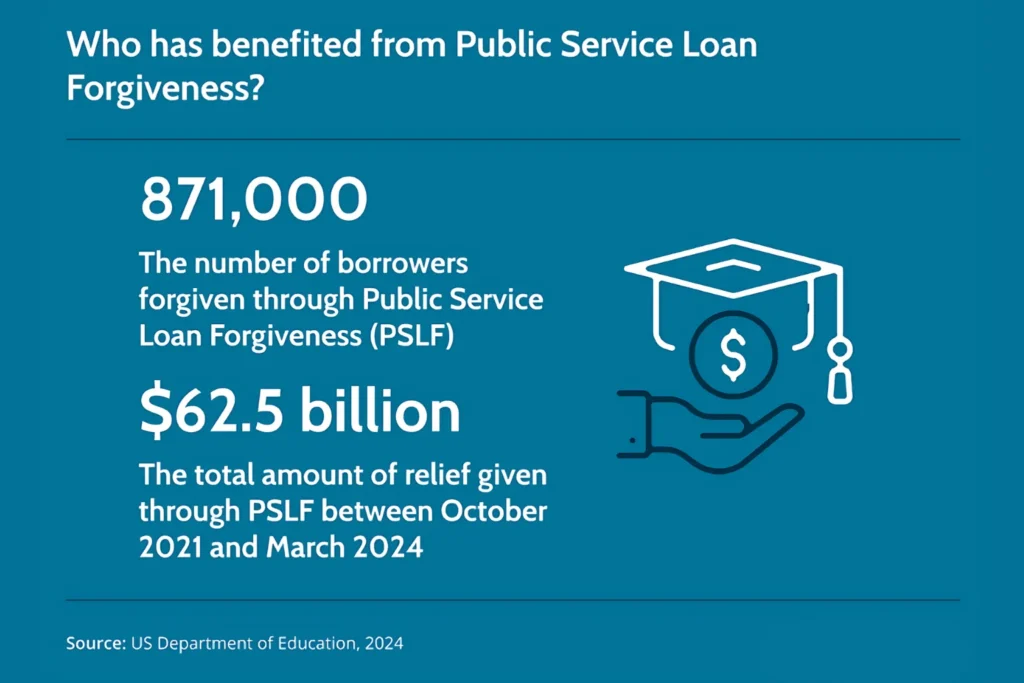
- PSLF has provided $62.5 billion in relief to 871,000 borrowers between October 2021 and March 2024, with another 380,000 expected by 2026 if payments continue.
- The program remains tax-free federally, unlike income-driven repayment forgiveness, which becomes taxable again in 2026.
The impending July 1, 2026, effective date heightens urgency for public service workers, as the rule could retroactively disrupt progress toward forgiveness for those in targeted organizations. This shift aligns with broader efforts to curb federal spending on student debt relief, amid a national student loan balance exceeding $1.7 trillion, and risks worsening shortages in essential sectors like education and healthcare where PSLF has boosted retention.
By narrowing eligibility, the change underscores tensions between taxpayer accountability and support for public servants, potentially shifting workforce dynamics in nonprofit and government roles.
Official Statements
The Department of Education framed the rule as a safeguard for taxpayers. Under Secretary Nicholas Kent stated it prevents subsidies for illegal activities. Critics, including labor unions, call it politically motivated retaliation.
Legal Challenges
A federal court tested the rule in February 2026, with challengers seeking to block implementation. The lawsuit from major cities argues the secretary’s discretion to define “substantial illegal purpose” oversteps authority. Additional suits from nonprofits highlight risks to healthcare workers.
Employer Impacts
Nonprofits fear disqualification after July 1, invalidating future payments toward the 120 required. Employees in affected roles must monitor certifications.Payments before the date remain valid, but switches may be needed.
Borrower Actions
Use the PSLF Help Tool to verify eligibility now. Submit forms annually. Consolidate non-Direct loans to preserve progress.
Public Service Loan Forgiveness originated in the College Cost Reduction and Access Act of 2007, signed by President George W. Bush, to incentivize careers in government and nonprofit sectors by forgiving Direct Loans after 10 years of full-time employment and 120 qualifying payments.
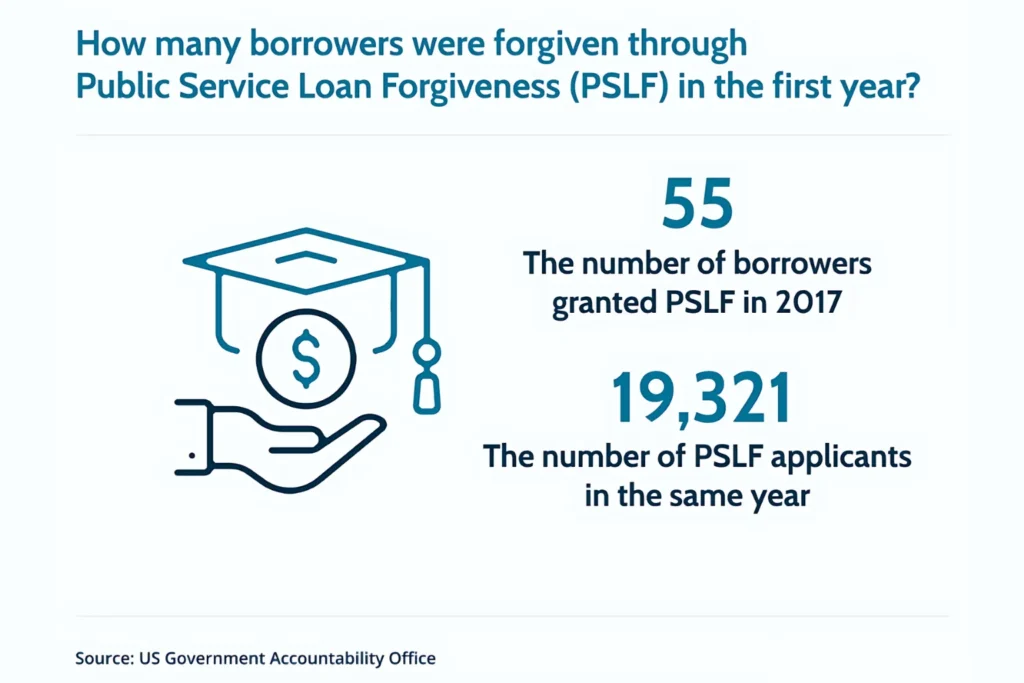
Initially, approval rates were dismal—only 55 borrowers forgiven in 2017 out of 19,321 applicants—due to strict repayment plan requirements and servicer errors.
The program faced early scrutiny under the Trump administration’s first term, with proposals to cap borrowing and restrict access, though full repeal was avoided. Biden-era reforms, including waivers and the Temporary Expanded PSLF, accelerated relief, crediting forbearances and non-qualifying plans, leading to historic forgiveness volumes. By 2024, over a million public servants benefited, primarily teachers, nurses, and first responders.
The 2025 final rule marks a reversal, echoing 2017-2021 efforts to limit scope. Parallel changes include the One Big Beautiful Bill Act’s new Repayment Assistance Plan starting July 2026, imposing $50,000 annual and $200,000 aggregate borrowing limits for high-cost programs like medicine. Parent PLUS loans lose IDR access post-July 1, 2026, unless consolidated earlier, ending their PSLF path.
These evolutions reflect partisan divides: Democrats expanded access to address debt burdens, while Republicans prioritize fiscal restraint, arguing broad forgiveness subsidizes elite professions unfairly. Cumulative data shows PSLF’s growth—from negligible early impact to $78 billion forgiven by 2025—yet persistent backlogs in applications and buybacks delay relief for thousands.
What’s Next
The rule activates July 1, 2026, enabling the Education Secretary to disqualify employers, with appeals likely extending into late 2026. Borrowers should certify employment before the date to lock in credits.
Congress may introduce bills like the Strengthening Loan Forgiveness for Public Service Workers Act to counter restrictions. Ongoing IDR phase-outs, including SAVE’s end, force plan switches by July 2028.
Federal agencies could expand repayment incentives up to $10,000 annually per employee, totaling $60,000, as retention tools. Advocacy groups predict more lawsuits if disqualifications target DEI or immigration support programs.
Frequently Asked Questions (People Also Ask)
What is Public Service Loan Forgiveness (PSLF)?
PSLF forgives remaining Direct Loan balances after 120 qualifying payments while working full-time for eligible government or nonprofit employers.
Who qualifies as a public service worker under the 2026 rules?
Full-time employees (at least 30 hours weekly) at federal, state, local, tribal governments, or 501(c)(3) nonprofits providing qualifying services, excluding those with substantial illegal purposes.
How do I apply for PSLF in 2026?
Use the online PSLF Help Tool to generate and submit the form, certifying employment annually or upon job changes.
Will PSLF forgiveness be taxed in 2026?
No, PSLF remains tax-free federally, unlike IDR forgiveness which becomes taxable.
What if my employer is disqualified after July 1, 2026?
Payments post-disqualification won’t count; prior ones do. Seek new qualifying employment to continue.
Can Parent PLUS loans still get PSLF?
Only if consolidated into Direct Loans before July 1, 2026, and placed on IBR.
How many payments are needed for PSLF?
120 on-time payments under income-driven or 10-year Standard plans, non-consecutive.
The 2026 PSLF changes signal a pivotal shift in student debt policy, balancing fiscal oversight with public service incentives. Workers must act swiftly to secure eligibility amid uncertainties.
For more breaking news on student loans, education aid, and financial strategies, visit RIGHWAY daily.