
Macaque Integration: Why Punch Monkey Faces Scolding
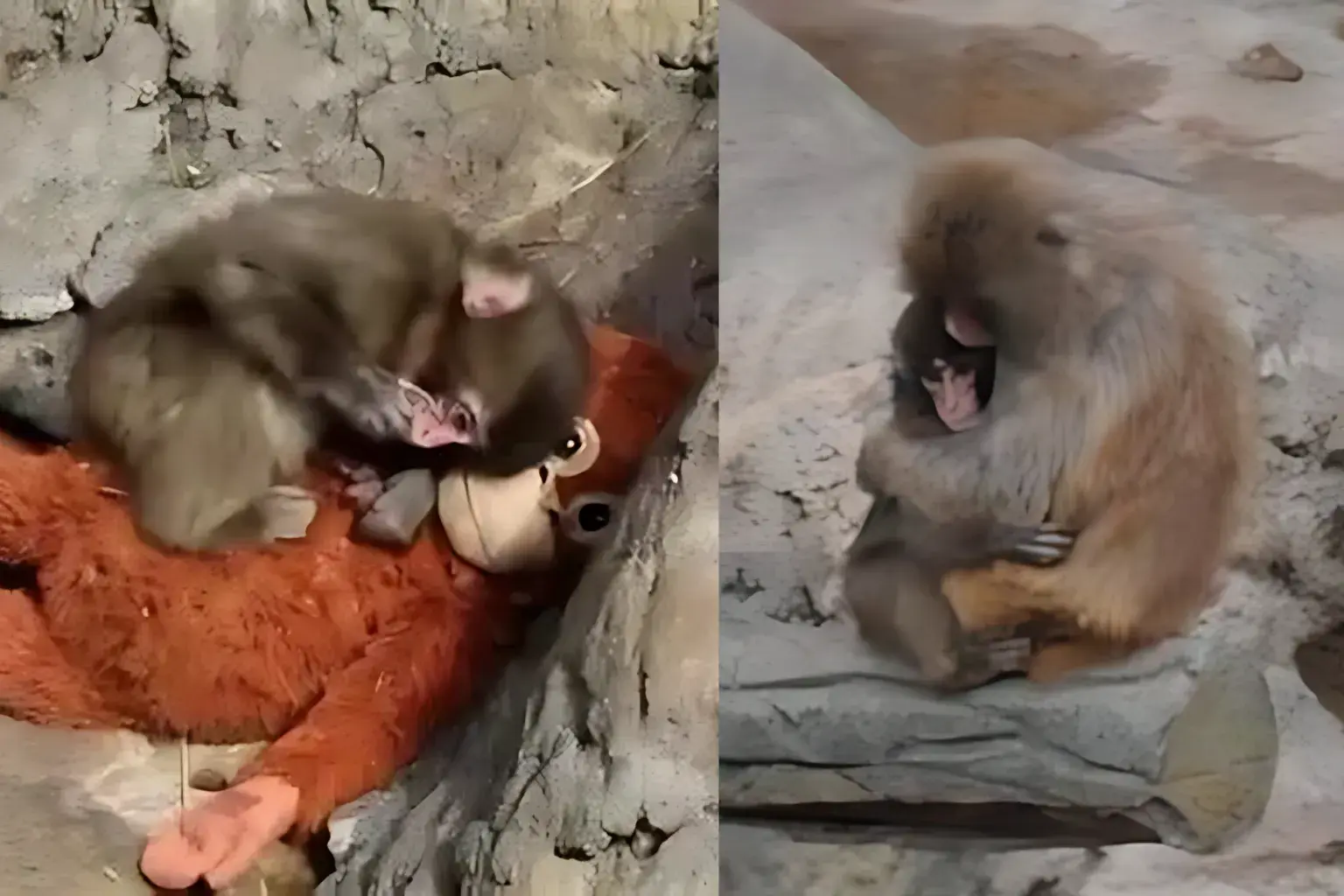
[ICHIKAWA, Japan] – Following viral Thursday morning footage of Punch the monkey being dragged by an adult macaque, the Ichikawa City Zoo issued a statement Friday assuring the public that the six-month-old orphan is unharmed. The startling incident, which sparked global outrage online, occurred when a protective mother disciplined the young primate, prompting zookeepers to clarify that such behavior is a normal, necessary step in complex macaque social integration.
Fast Facts: The Ichikawa Zoo Incident
- The Incident: Viral footage recorded on Thursday showed Punch, an orphaned Japanese macaque, being aggressively dragged by an adult female member of his troop.
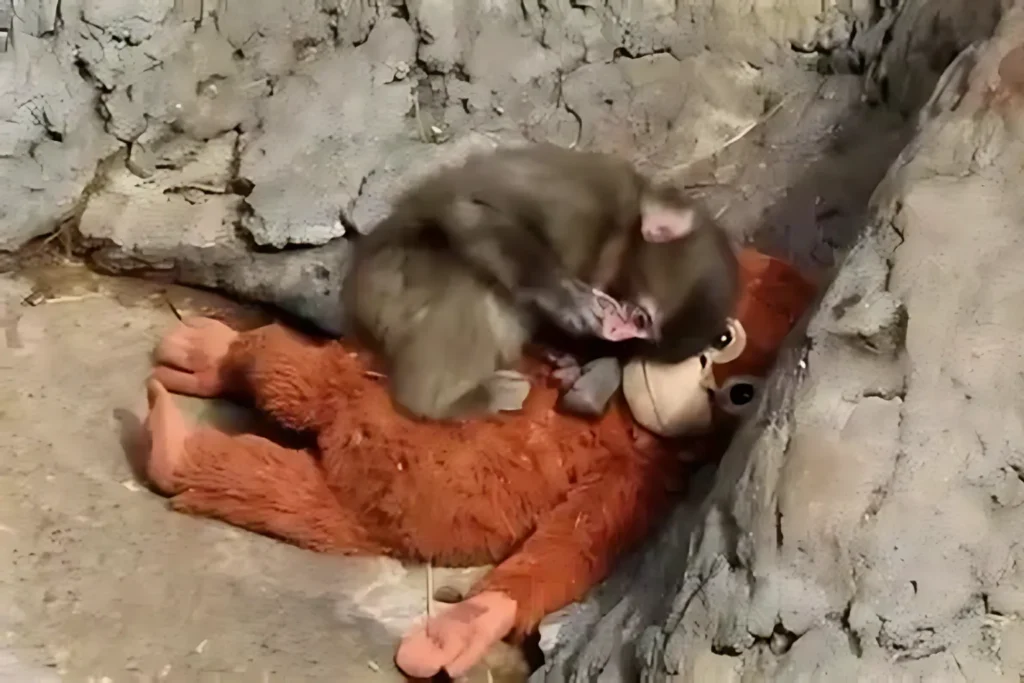
- The Reaction: Millions of social media users expressed immediate alarm as the infant retreated to a corner, clutching his familiar stuffed orangutan toy for comfort.
- The Explanation: Zoo officials confirmed the interaction was standard primate discipline, initiated by an adult female expressing annoyance after Punch attempted to interact with her offspring.
- The Outcome: Punch recovered swiftly from the scolding, resumed normal communication with the troop within minutes, and participated in regular feeding schedules without signs of distress.
Why This Matters: The Intersection of Biology and Public Perception
The viral reaction to the footage highlights a growing friction point in modern wildlife management: the gap between human emotional responses and the harsh, practical realities of animal behavior. For professionals in zoology, ethology, and animal husbandry—fields requiring immense psychological resilience and objective observation—the incident underscores the dangers of anthropomorphism.
The public instinctively viewed the dragging of an orphaned infant clutching a plush toy through a human lens, categorizing it as abuse. However, for experts managing the delicate process of troop integration, this harsh discipline is a critical mechanism for the monkey’s long-term survival. Understanding this dynamic offers profound lessons in behavioral adaptation, professional crisis communication, and the raw mechanics of building resilience in highly social environments.
Market Reaction: Global Outcry Over Viral Footage
The footage began circulating rapidly across social media platforms early Thursday morning, generating intense scrutiny from animal welfare advocates and casual observers worldwide. The video captured a tense sequence: Punch attempting to engage with another infant macaque, the infant retreating, and a large adult female subsequently seizing Punch and dragging him across the enclosure.
The visual of the six-month-old primate subsequently retreating to a corner to hide behind an orangutan plushie—a surrogate comfort object provided by zookeepers since his birth—triggered an immediate emotional response from viewers. Online commentators flooded the Ichikawa City Zoo’s communication channels, demanding intervention, separation of the infant from the troop, and an immediate welfare check. The digital uproar necessitated a rapid, authoritative response from wildlife professionals to prevent the spread of misinformation regarding the zoo’s integration protocols.
Official Statements: Ichikawa City Zoo Explains the Altercation
In a detailed statement released Friday on the social media platform X, the Ichikawa City Zoo systematically addressed the public’s concerns, breaking down the biological context of the viral event.
“We have confirmed that several videos have gone viral on the internet,” the zookeepers wrote. “When Punch approached another baby monkey from the troop in attempt to communicate, the baby monkey avoided him. Punch then sat down, apparently giving up on communicating with the monkey, after which he was scolded and dragged by an adult monkey.”
Zoo behavioral specialists provided critical context regarding the aggressor’s motivations, identifying the adult monkey as the likely mother of the infant Punch had approached.
“She probably felt that her baby was annoyed by Punch and got upset, expressing ‘don’t be mean,'” the statement noted. The experts emphasized that within the rigid, matrilineal hierarchy of Japanese macaques (Macaca fuscata), this form of physical reprimand is a standard educational tool. “Punch has been scolded by other monkeys many times in the past and has learned how to socialize with them.”
The Role of the Orangutan Plushie in Primate Recovery
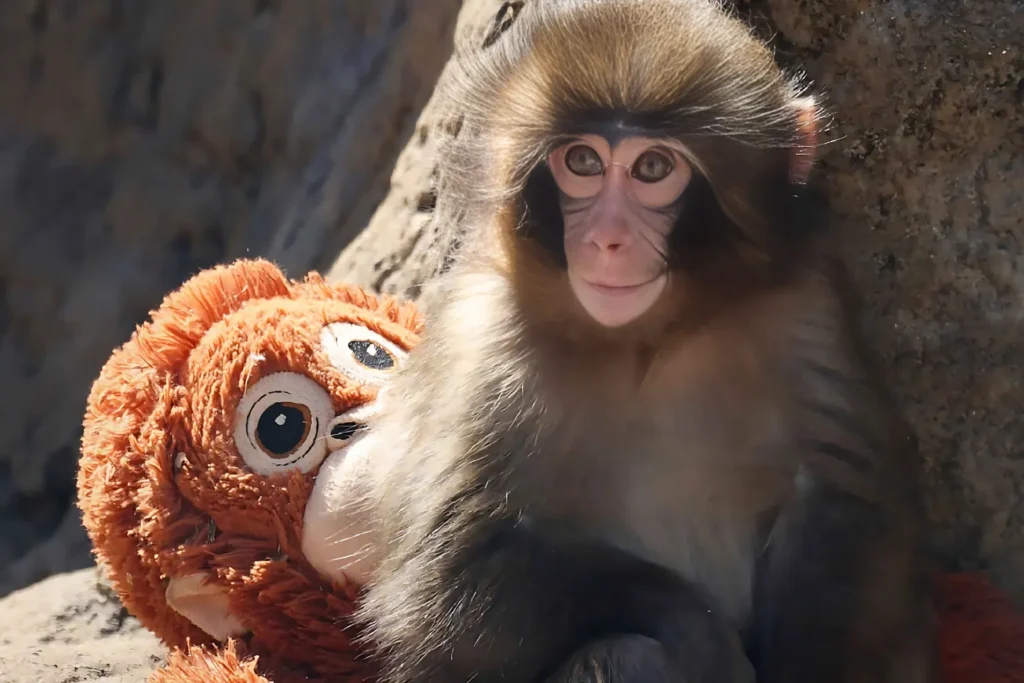
The most emotionally resonant element of the video—Punch clutching his beloved orangutan plush toy—was also addressed by the zoo. While the behavior is undeniably sympathetic, zookeepers stressed that it represents a healthy coping mechanism for a macaque of his specific developmental stage and background.
“In the video, Punch runs to his stuffed orangutan toy after being dragged. However, as usual, he left the stuffed toy after a short while and was communicating with other monkeys,” the zoo reported.
This rapid recovery is exactly what behavioral scientists look for when assessing an animal’s psychological hardiness. During feeding time later that day, zookeepers confirmed, “Punch acted no differently than any other day.”
The Science of Macaque Social Structures and Discipline
To understand why zookeepers did not intervene during the dragging incident, one must examine the fundamental social architecture of Japanese macaques. These primates live in complex, multi-male, multi-female troops governed by strict dominance hierarchies. Matrilines—lines of descent traced through the female—dictate social standing.
For an orphaned macaque, the absence of a biological mother is a severe disadvantage. In the wild, an infant without a mother to provide physical protection and social leveraging rarely survives, as it lacks a shield against the aggression of higher-ranking troop members. When zookeepers attempt to integrate a hand-reared orphan into an established troop, they are essentially asking the troop to accept an outsider with no social capital.
Discipline within these groups is inherently physical. Biting, dragging, pinning, and chasing are not acts of malicious abuse; they are the language through which boundaries are drawn, dominance is asserted, and social etiquette is enforced. When the adult female dragged Punch, she was successfully communicating a clear boundary regarding her own offspring. By retreating, self-soothing with his surrogate plushie, and eventually returning to the group to try again, Punch demonstrated an acute understanding of this physical language.
Background: The Timeline of Punch’s Integration
Understanding the magnitude of Punch’s progress requires looking at his early life timeline.
- July 26, 2025: Punch is born at the Ichikawa City Zoo. Immediately following his birth, he is abandoned by his mother—a relatively common occurrence in captive and wild primate populations due to maternal stress, lack of experience, or health complications. Zookeepers step in to hand-rear the infant to ensure his physical survival, providing round-the-clock care and introducing the orangutan plushie as a tactile surrogate for a mother’s fur.
- January 19, 2026: Following months of physical development and visual habituation to the troop, zookeepers initiate the formal physical introduction process. This is the most dangerous phase of primate husbandry, fraught with the risk of lethal aggression.
- February 19, 2026 (Thursday): The viral dragging incident occurs and is captured on video by a zoo visitor, sparking the international controversy.
- February 20, 2026 (Friday): The zoo issues its comprehensive statement defending the integration process and Punch’s resilience.
Professional Lessons: Resilience and Crisis Management
For professionals studying animal behavior, biology, or even those in human-centric career paths analyzing psychological resilience, Punch’s journey offers a masterclass in adaptation. The zoo’s statement highlighted this directly:
“In order to integrate Punch into other Japanese monkey troops, we anticipated that this kind of challenge may arise,” the zoo stated. “Although Punch has been scolded many times by other monkeys, no single monkey has shown serious aggression toward him. While Punch is scolded, he shows resilience and mental strength.”
This distinction between “scolding” (educational discipline) and “serious aggression” (lethal intent) is the cornerstone of professional wildlife management. Zookeepers must suppress the human instinct to coddle the infant to allow him to build the mental strength necessary for his species. The zoo’s final plea to the public was a call for a shift in perspective: “When you observe the disciplinary behaviors from other troop members toward Punch when he tries to communicate with them, we would like you to support Punch’s effort rather than feel sorry for him.”
What’s Next: The Long Road to Full Troop Integration
The integration of an orphaned macaque is not a single event but a prolonged, multi-year process. The immediate fallout from the viral video has resulted in increased public scrutiny, meaning the Ichikawa City Zoo will likely continue to operate under a microscope.
However, operationally, the zoo’s strategy remains unchanged. Zookeepers will continue to conduct highly monitored integration sessions. The ultimate goal is for Punch to gradually rely less on his orangutan plushie and more on the social bonds he forms within the troop. In primate communities, acceptance is often solidified through grooming. As Punch learns to navigate the complex social codes without offending high-ranking mothers, experts expect to see an increase in mutual grooming behaviors—the ultimate sign that he has been accepted as a permanent fixture of the society.
Until then, visitors and global audiences can expect further instances of scolding. Each reprimand, while difficult for human audiences to watch, is a vital lesson in survival, teaching Punch the exact parameters of macaque society.
Frequently Asked Questions (People Also Ask)
Is Punch the monkey safe?
Yes. Following the viral dragging incident, zoo officials and behavioral experts confirmed that Punch suffered no injuries. He was observed eating and communicating normally with the troop shortly after the altercation.
Why did the adult monkey drag Punch?
The adult female monkey dragged Punch as a form of social discipline. Punch had attempted to interact with her baby, who became avoidant. The mother intervened to protect her infant and assert dominance, communicating a clear boundary to the orphaned macaque.
What kind of monkey is Punch?
Punch is a Japanese macaque, scientifically known as Macaca fuscata. They are also commonly referred to as “snow monkeys” and are native to the islands of Japan.
Where does Punch the monkey live?
Punch lives at the Ichikawa City Zoo, located in Chiba Prefecture, Japan, near Tokyo.
Why does Punch hold an orangutan toy?
Punch was abandoned by his biological mother immediately after his birth in July 2025. Zookeepers provided the stuffed orangutan toy to act as a surrogate mother, offering the tactile comfort and emotional security that an infant macaque requires for healthy psychological development.
Is monkey troop discipline normal?
Yes. Physical discipline, including dragging, biting, and chasing, is entirely normal and essential within macaque troops. It is how these highly social animals teach boundaries, enforce the matrilineal hierarchy, and maintain order within the group.
For more breaking news on celebrities, career milestones, and self-improvement stories, visit Righway daily.